Semi-Custom vs. Custom Cabinets: Which Is Right for Your Kitchen?
Choosing kitchen cabinets is one of the most important decisions in a remodeling project. Semi-custom cabinets offer a balance between standard sizes and personalization, while custom cabinets provide greater control over dimensions, storage, materials, and design details. The right choice depends on your kitchen layout, storage needs, budget, design preferences, and project timeline.
What Is the Difference Between Semi-Custom and Custom Cabinets?
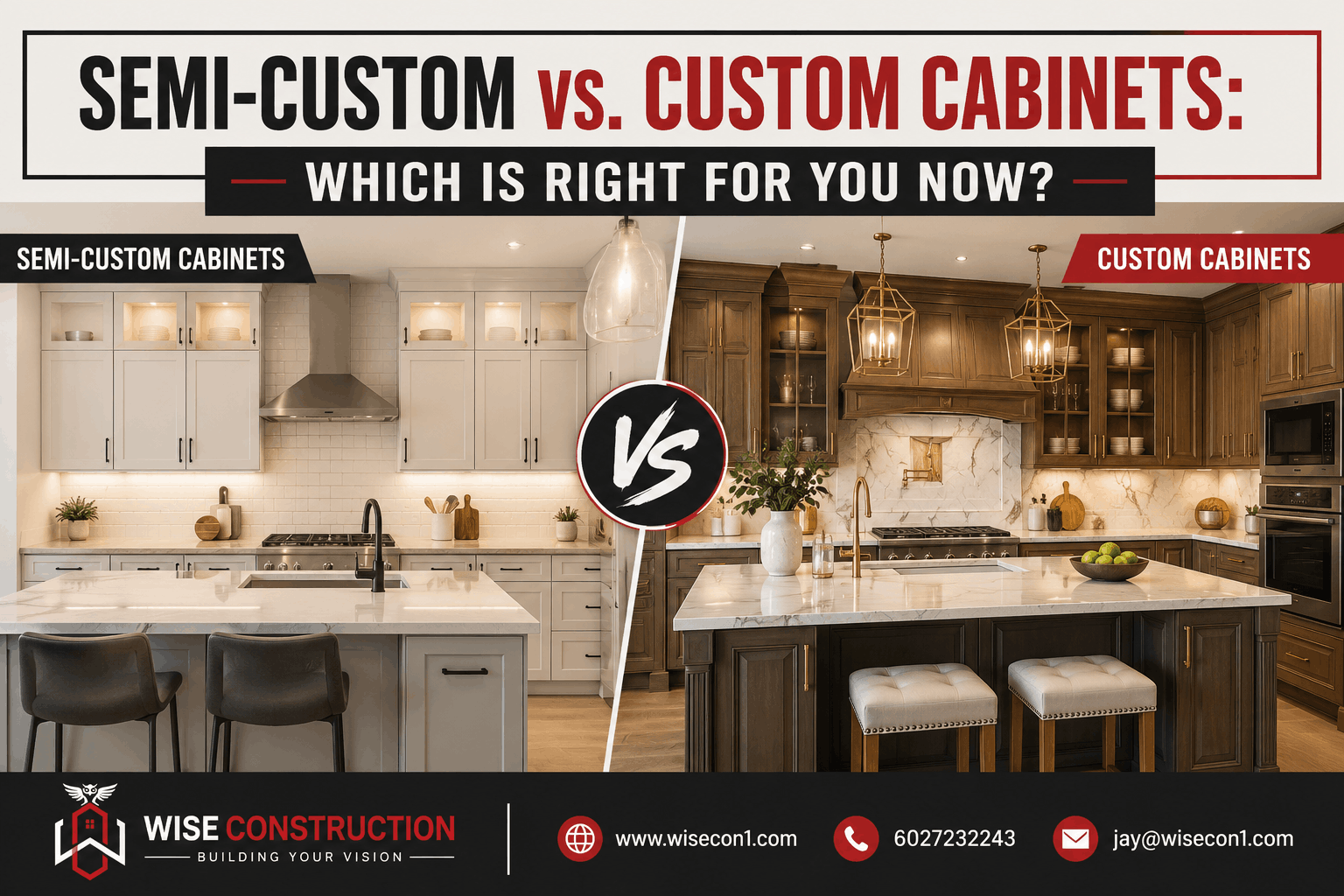
Semi-custom and custom cabinets both provide more flexibility than basic stock cabinetry, but they differ in how much control you have over the final design.
Semi-custom cabinets are manufactured as part of an established cabinet line. Homeowners can usually choose from different cabinet sizes, door styles, finishes, hardware, and storage configurations. Some modifications may also be available, depending on the manufacturer.
Custom cabinets are designed specifically for the kitchen. Cabinet dimensions, configurations, storage features, materials, and finishes can be planned around the space and the homeowner’s requirements.
In simple terms, semi-custom cabinets provide a defined range of choices, while custom cabinetry gives you much greater control over the final result.
How Do Semi-Custom and Custom Cabinets Compare?
| Feature | Semi-Custom Cabinets | Custom Cabinets |
|---|---|---|
| Design flexibility | Moderate to high | Very high |
| Cabinet dimensions | Based on available sizes | Designed to project requirements |
| Storage customization | Good | Extensive |
| Finish choices | Multiple options | Highly customizable |
| Unusual spaces | Some limitations | Highly adaptable |
| Design control | Moderate | High |
| Cost | Generally lower | Generally higher |
| Production | Often more standardized | More project-specific |
| Best suited for | Flexible conventional layouts | Unique or highly specific kitchens |
Neither option is automatically better. A semi-custom cabinet system may be more practical for one kitchen, while custom cabinetry may make more sense for another.
What Are Semi-Custom Cabinets?
Semi-custom cabinets are manufactured using an established cabinet system but offer more choices than standard stock cabinets. Depending on the manufacturer, homeowners may be able to select different cabinet dimensions, door profiles, finishes, hardware, drawer configurations, and organizational accessories.
This makes semi-custom cabinetry suitable for many kitchens with conventional layouts. Homeowners can personalize the appearance and some functional features without designing every cabinet from the ground up.
Who Are Semi-Custom Cabinets Best For?
Semi-custom cabinets may be a good fit if you:
- Want more choices than stock cabinets provide
- Have a relatively conventional kitchen layout
- Need several storage configurations
- Want to control cabinet costs
- Prefer a more standardized production process
- Do not require highly unusual cabinet dimensions
For many homeowners, semi-custom cabinetry provides enough flexibility to create a practical and attractive kitchen without requiring fully customized construction.
What Are Custom Cabinets?
Custom cabinets are designed around the specific requirements of a kitchen. Instead of selecting only from predetermined cabinet configurations, the design can account for the exact dimensions and characteristics of the room.
This can be particularly useful when the kitchen includes unusual walls, difficult corners, tall ceilings, unique architectural features, or specialized storage requirements.
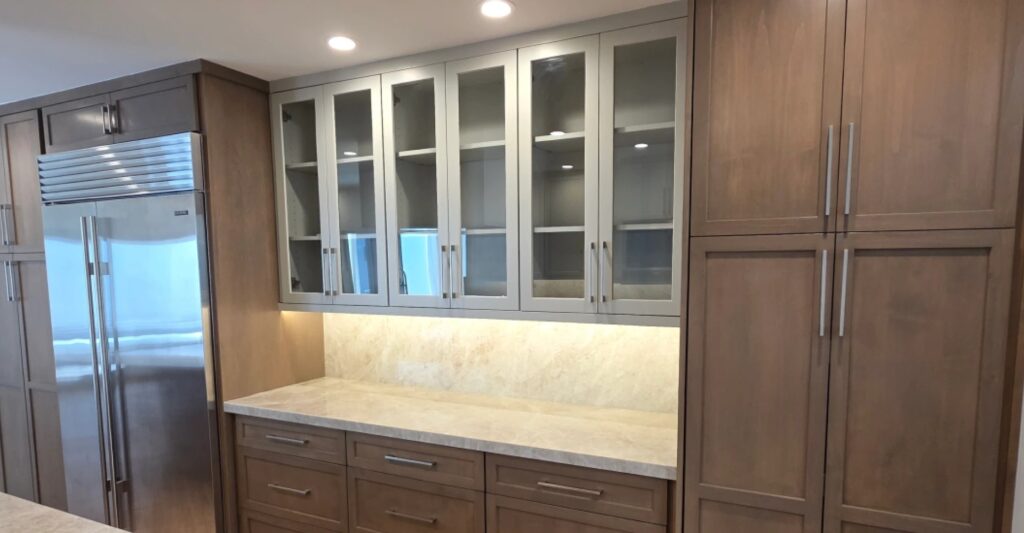
Custom cabinetry can also incorporate features such as built-in appliance storage, specialized drawers, custom islands, integrated organizers, and cabinetry designed around specific appliances.
Who Are Custom Cabinets Best For?
Custom cabinets may be appropriate when you:
- Have an unusual kitchen layout
- Need specific cabinet dimensions
- Want specialized storage
- Have difficult corners or unused spaces
- Want extensive control over finishes
- Need cabinetry around architectural features
- Want a highly coordinated kitchen design
The additional flexibility can be valuable when standard cabinet dimensions would leave awkward gaps or fail to make efficient use of the available space.
Which Cabinet Option Gives You More Design Flexibility?
Custom cabinets generally provide more design flexibility because the cabinetry can be planned around the specific room rather than selecting from a predetermined range of configurations.
With custom cabinetry, homeowners may have greater control over:
- Cabinet height and width
- Drawer sizes
- Storage configurations
- Door styles
- Finishes
- Hardware
- Decorative details
- Island dimensions
- Appliance integration
Semi-custom cabinets can still offer a wide range of design choices. However, some dimensions, configurations, or specialized features may not be available within the manufacturer’s system.
The important question is not simply which option offers more choices. It is whether you actually need that additional flexibility for your kitchen.
Which Is Better for Kitchen Storage?
The best cabinet system is one that provides storage where you need it and makes frequently used items easy to access.
Semi-custom cabinets can provide useful storage features such as pull-out shelves, deep drawers, pantry cabinets, tray dividers, and organizational accessories. These options can be enough for many kitchens.
Custom cabinets can go further when storage requirements are highly specific. For example, a cabinet can be planned around a particular appliance, a narrow unused section of wall, an unusual corner, or a homeowner’s preferred organization system.
Before choosing cabinets, make a list of what you need to store. Consider cookware, dishes, food, small appliances, cleaning supplies, serving pieces, and items that need to remain accessible.
Are Custom Cabinets Better for Unusual Kitchen Layouts?
Unusual spaces are one of the situations where custom cabinetry can provide a significant advantage.
A kitchen may have:
- Angled walls
- Narrow sections
- Uneven dimensions
- Low or high ceilings
- Structural columns
- Windows or doors in difficult locations
- Unusual corners
- Specialized appliance locations
Semi-custom cabinetry can work in many layouts, but available cabinet dimensions may leave gaps or require compromises in certain spaces.
Custom cabinets can be designed to use these areas more effectively. However, the additional design flexibility should be weighed against the project’s budget and timeline.
Are Semi-Custom Cabinets More Affordable Than Custom Cabinets?
Semi-custom cabinets are generally less expensive than fully custom cabinetry, but there is no single price that applies to every project.
The total cost can depend on:
- Number of cabinets
- Cabinet dimensions
- Materials
- Door style
- Finish
- Hardware
- Interior organizers
- Custom features
- Installation
- Kitchen layout
- Project complexity
Custom cabinets generally involve more design and manufacturing work, which can increase the overall investment.
It is also important to compare complete project costs rather than looking only at the cabinet price. Installation, countertops, hardware, modifications, delivery, and other remodeling work can all affect the final budget.
Which Cabinet Option Takes Longer to Complete?
The timeline depends on the manufacturer, cabinet design, materials, availability, installation requirements, and overall remodeling scope.
Semi-custom cabinets may have a more standardized production process, which can make planning easier in some projects. Custom cabinets may require additional measuring, design development, material selection, manufacturing, and review before installation.
Homeowners should ask about the expected production and delivery schedule before making a decision. A cabinet choice should fit the overall remodeling timeline, especially when appliances, countertops, plumbing, and other trades depend on cabinet installation.
What Materials and Finishes Can You Choose?
Cabinet materials and finishes affect appearance, durability, maintenance, and cost.
Common material considerations include:
- Hardwood
- Wood veneer
- Plywood
- MDF
- Other engineered materials
Finish options may include:
- Painted finishes
- Natural wood
- Stained finishes
- Matte finishes
- Gloss finishes
The right material depends on the cabinet construction, location, expected use, desired appearance, and budget.
Rather than selecting a cabinet finish in isolation, consider how it will coordinate with countertops, backsplash, flooring, appliances, lighting, and hardware.
How Do Semi-Custom and Custom Cabinets Affect Kitchen Design?
Cabinetry is one of the largest visual elements in a kitchen, so it should be planned as part of the overall design.
Cabinets influence the placement and appearance of:
- Countertops
- Backsplash
- Kitchen islands
- Appliances
- Flooring
- Lighting
- Hardware
For example, appliance dimensions should be confirmed before final cabinet layouts are completed. Similarly, island dimensions should account for seating, circulation, electrical requirements, and surrounding work areas.
A well-planned cabinet design connects these elements rather than treating each decision separately.
What Are the Pros and Cons of Semi-Custom Cabinets?
Semi-custom cabinets offer a middle ground between stock and fully custom cabinetry.
Advantages
- More choices than stock cabinets
- Multiple door styles and finishes
- Various storage configurations
- Suitable for many conventional layouts
- Potentially lower cost than custom cabinetry
- Often a more standardized ordering process
Considerations
- Some dimensions may be unavailable
- Certain unusual spaces may be difficult to accommodate
- Customization is limited compared with fully custom cabinetry
- Specialized storage features may depend on the cabinet line
Semi-custom cabinetry can be a practical choice when the available configurations meet the kitchen’s functional and design requirements.
What Are the Pros and Cons of Custom Cabinets?
Custom cabinets provide a higher degree of personalization, but that flexibility comes with additional considerations.
Advantages
- Highly flexible dimensions
- Better solutions for unusual spaces
- Specialized storage options
- Greater design control
- Ability to coordinate cabinetry with unique architectural features
- More control over certain materials and finishes
Considerations
- Generally higher project cost
- More design decisions
- Potentially longer production time
- Greater need for accurate measurements and planning
Custom cabinetry makes the most sense when the additional flexibility solves a real problem or supports a specific design goal.
Semi-Custom vs. Custom Cabinets: Which Should You Choose?
The best choice depends on what your kitchen requires.
Choose Semi-Custom Cabinets If:
- Your kitchen has a relatively standard layout
- Available cabinet dimensions work for your space
- You want several style and finish choices
- Your storage needs can be addressed through available configurations
- You want greater control over the cabinet budget
- You prefer a more standardized cabinet system
Choose Custom Cabinets If:
- Your kitchen has unusual dimensions
- You need specialized storage
- Standard cabinet sizes leave inefficient spaces
- You want exact cabinet dimensions
- You have unique architectural features
- You want extensive control over the design
- Cabinetry is a major part of your overall kitchen plan
The goal should be to select the cabinet system that solves your specific needs without paying for customization you do not actually require.
What Should You Ask Before Choosing Kitchen Cabinets?
Before ordering cabinets, ask questions that address both the product and the complete remodeling project.
- What are the exact dimensions of the kitchen?
- How much storage does the household actually need?
- Are there unusual areas that require special cabinet configurations?
- What materials are available?
- Which finishes and door styles are available?
- What interior storage accessories can be added?
- How will the cabinets work with the appliances?
- What is included in the cabinet price?
- Is installation included?
- What is the expected production and delivery timeline?
- What warranty is provided?
- How will design changes affect the final cost?
Getting clear answers before ordering can help prevent misunderstandings later in the project.
What Should You Know Before Ordering Kitchen Cabinets?
Cabinets should not be ordered before the overall kitchen plan has been properly evaluated.
Important items to confirm include:
- Final kitchen measurements
- Appliance specifications
- Plumbing locations
- Electrical requirements
- Island dimensions
- Countertop requirements
- Backsplash plans
- Cabinet hardware
- Lighting
- Storage requirements
This is especially important when the kitchen layout is changing. A cabinet decision can affect countertops, appliances, plumbing, electrical work, and other parts of the remodeling project.
How Can a Professional Cabinet Design Process Help?
Professional cabinet planning can help homeowners identify practical solutions before construction begins. A well-organized process typically involves measuring the space, reviewing the existing layout, identifying storage requirements, coordinating appliances, selecting materials, and confirming cabinet configurations.
For kitchens that require more extensive customization, professional planning can also help coordinate cabinetry with structural changes, electrical work, plumbing, countertops, lighting, and other remodeling elements.
Wise Construction provides custom cabinetry and millwork as part of its remodeling services. Homeowners can learn more about its approach to Custom Cabinetry + Millwork and Kitchen Design + Remodeling.
Kitchen Cabinet Selection Checklist
Before making your final decision, review the following:
- Measure the kitchen
- Evaluate the existing layout
- Identify storage problems
- Determine cabinet dimensions
- Compare semi-custom and custom options
- Select a door style
- Compare cabinet materials
- Choose a finish
- Select cabinet hardware
- Plan interior storage
- Confirm appliance dimensions
- Review island requirements
- Coordinate countertop plans
- Confirm installation requirements
- Review warranty information
- Understand the production timeline
- Confirm the complete project cost
Conclusion
Choosing between semi-custom and custom cabinets comes down to the needs of your kitchen rather than simply choosing the most customizable option. Semi-custom cabinets can provide a useful balance of design choices, storage, and budget control, while custom cabinets offer greater flexibility for unusual layouts, specialized storage, and highly specific design requirements.
Before making a decision, evaluate your kitchen dimensions, storage needs, appliances, materials, budget, and project timeline. If you need help coordinating cabinetry with a larger kitchen remodeling project, Wise Construction Kitchen Design + Remodeling and Custom Cabinetry + Millwork services can help you evaluate the options for your project.
Frequently Asked Questions About Semi-Custom and Custom Cabinets
How do I know if my kitchen needs a renovation?
+
Your kitchen may benefit from renovation if the layout is difficult to use, storage is limited, cabinets are outdated, surfaces are worn, or the space no longer meets your household’s needs. A renovation can address these issues while improving functionality, appearance, and overall comfort.
Are custom cabinets more expensive than semi-custom cabinets?
+
Custom cabinets generally cost more because they involve greater design and manufacturing flexibility. However, the final cost depends on materials, dimensions, finishes, features, installation, and overall project complexity.
Are semi-custom cabinets good for kitchen remodeling?
+
Yes. Semi-custom cabinets can be a practical option for many kitchens, particularly when the available sizes and configurations meet the homeowner’s storage and design requirements.
Are custom cabinets worth the additional cost?
+
They can be worthwhile when the kitchen has unusual dimensions, specialized storage requirements, or design needs that standard cabinet configurations cannot adequately address. The value depends on the specific project.
Which cabinets are better for unusual kitchen layouts?
+
Custom cabinets generally provide greater flexibility for unusual layouts because the dimensions and configurations can be planned around the space. Semi-custom options may still work depending on the available cabinet sizes.
Can semi-custom cabinets be customized?
+
Yes. Depending on the manufacturer, semi-custom cabinets may offer choices in sizes, door styles, finishes, hardware, drawer configurations, and storage accessories.
How long do custom cabinets take to make?
+
The timeline varies based on the cabinet manufacturer, design complexity, materials, finishes, production schedule, and project requirements. Homeowners should confirm the expected timeline before ordering.
Can custom cabinets improve kitchen storage?
+
Yes. Custom cabinetry can be designed around specific storage requirements, including unusual spaces, specialized drawers, pantry areas, appliance storage, and other organizational needs.
Should cabinets be selected before countertops?
+
Cabinets and countertops should be planned together because cabinet dimensions, appliance placement, countertop overhangs, sink requirements, and installation details are interconnected.
How do I decide between semi-custom and custom cabinets?
+
Start with your kitchen layout, storage needs, budget, design preferences, and timeline. If standard configurations meet your requirements, semi-custom may be sufficient. If the kitchen requires specific dimensions or specialized solutions, custom cabinetry may be more appropriate.