
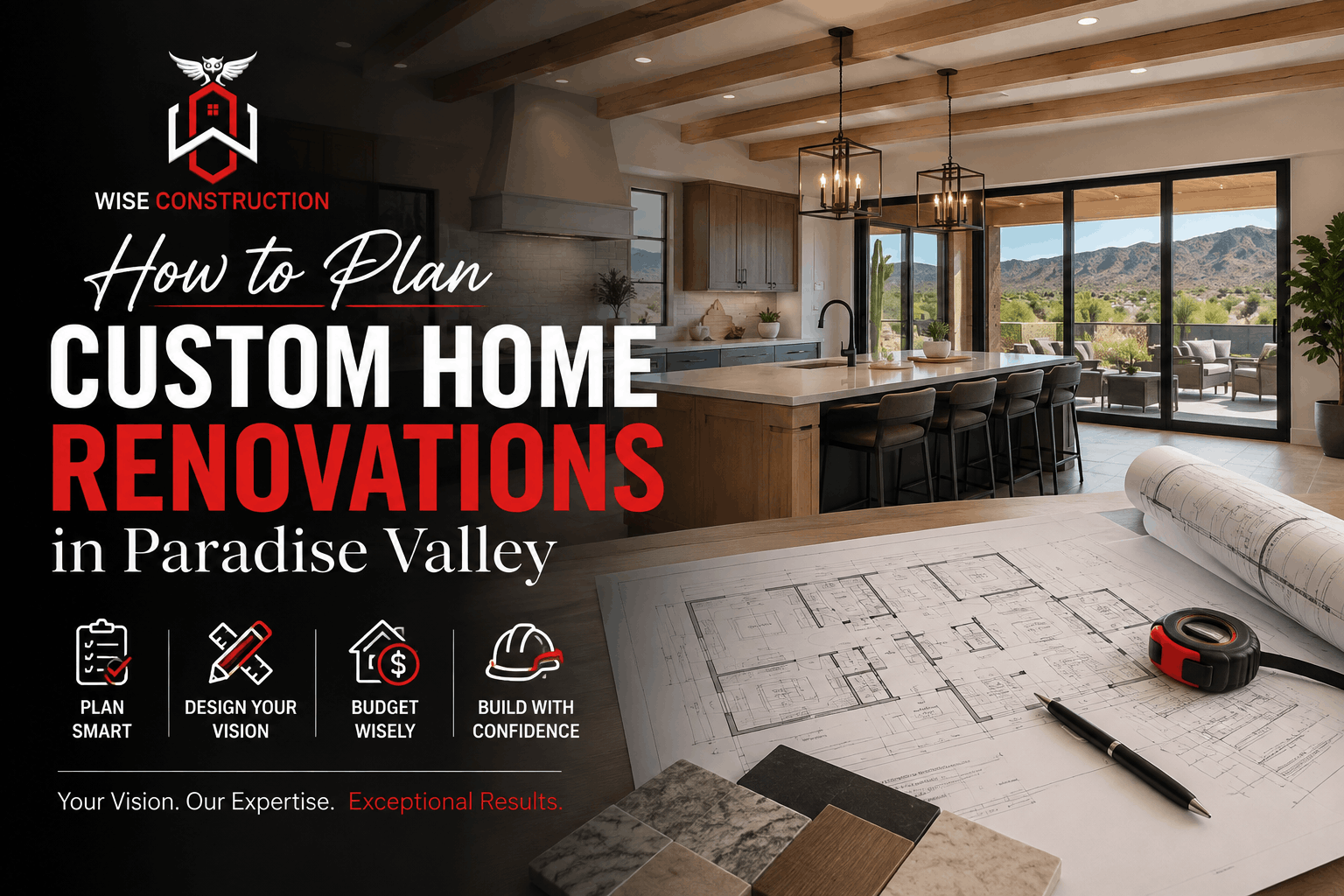
How to Plan Custom Home Renovations in Paradise Valley
Quick Answer
Planning custom home renovations in Paradise Valley starts with defining your goals, understanding local zoning and permit requirements, and setting a realistic budget before design work begins. Paradise Valley has its own building codes and hillside regulations separate from Phoenix and Scottsdale, so local experience matters. A clear plan upfront helps homeowners avoid delays, budget surprises, and design changes once construction is already underway.
Why Planning Matters for Custom Home Renovations in Paradise Valley
Paradise Valley is known for large lots, custom architecture, and strict zoning standards that protect the town’s low-density character. Renovating a home here often involves more planning upfront than in surrounding cities, simply because of how carefully the Town reviews projects.
A well-planned renovation accounts for zoning setbacks, hillside restrictions where they apply, and the specific permit process the Town of Paradise Valley uses. Skipping this step can lead to delays once plans are submitted for review.
Careful planning also protects your budget. Custom finishes, structural changes, and site conditions specific to Paradise Valley properties all affect cost, and understanding these factors early prevents surprises later in the project.
Steps to Plan a Custom Home Renovation in Paradise Valley
1. Define Your Goals and Priorities
Start by identifying what you actually want the renovation to accomplish, whether that’s more living space, updated finishes, or a layout that better fits how your family uses the home. Clear goals make every decision afterward easier.
2. Understand Local Zoning and Permit Requirements
Paradise Valley has its own building and planning divisions separate from the City of Phoenix or City of Scottsdale. Most renovation work, from structural changes to additions, requires a permit through the Town of Paradise Valley’s Building Division.
Homeowners can review specific permit types and required documents through the Town’s Permits and Handouts page before finalizing design plans.
3. Confirm Hillside or Zoning Restrictions Where Applicable
Some Paradise Valley properties fall under hillside or special zoning regulations that affect what can be built and where. The Town’s Planning Division reviews zoning compliance and can clarify whether your property has any special restrictions before design work moves forward.
4. Set a Realistic Budget With a Contingency
Custom renovations rarely go exactly as planned, especially in older homes where existing conditions aren’t fully known until construction begins. Building in a contingency of at least 10 to 15 percent helps absorb unexpected costs without derailing the project.
5. Choose a Design-Build Approach for Complex Projects
Custom renovations that involve structural changes, additions, or full home remodels benefit from a design-build process, where design and construction are managed by the same team. This reduces miscommunication between the design phase and the construction phase.
6. Work With a Contractor Experienced in Paradise Valley Projects
Not every contractor is familiar with Paradise Valley’s specific permit process, hillside regulations, or the design expectations common in the area. Local experience helps projects move through Town review more efficiently.
7. Plan for Construction Timing and Site Access
The Town of Paradise Valley enforces specific construction hours and site rules to minimize disruption to neighbors, including limits on working hours and where materials can be staged. Confirming these details early avoids scheduling conflicts once work begins.
8. Review the Full Scope Before Signing a Contract
Before construction starts, make sure your contract clearly outlines the scope of work, materials, timeline, and payment schedule. A detailed contract protects both you and your contractor throughout the renovation.
Planning Checklist for Custom Home Renovations in Paradise Valley
Paradise Valley Renovation Planning Checklist
- Define your renovation goals and priorities
- Confirm zoning and permit requirements with the Town
- Check for hillside or special zoning restrictions
- Set a budget with a 10 to 15 percent contingency
- Decide whether a design-build approach fits your project
- Choose a contractor with Paradise Valley experience
- Confirm construction hours and site access rules
- Review the full contract before signing
Comparison: Planned Renovation vs. Unplanned Renovation
| Factor | Planned Renovation | Unplanned Renovation |
|---|---|---|
| Permits | Confirmed before design finalized | Often discovered mid-project |
| Budget | Includes contingency for surprises | Frequently exceeded |
| Zoning compliance | Verified early with the Town | Risk of costly redesign later |
| Timeline | Realistic and clearly communicated | Prone to delays |
| Contractor selection | Chosen for local experience | Often chosen on price alone |
| Design changes | Minimal once construction starts | Common and costly |
Why Local Experience Matters in Paradise Valley
Paradise Valley’s building requirements differ from neighboring cities in meaningful ways, including lower density zoning, hillside considerations, and a Town-specific permit process. A contractor familiar with these details can anticipate requirements before they become delays.
Local experience also means a better understanding of the custom architecture common throughout Paradise Valley, from desert contemporary to traditional Southwest styles. Renovations that respect this architectural character tend to blend more naturally with the rest of the home and the surrounding neighborhood.
Why Homeowners Choose Wise Construction for Paradise Valley Renovations
Homeowners in Paradise Valley choose Wise Construction for custom home renovations because of the team’s experience navigating local permitting, zoning, and design requirements specific to the town. Design and construction are coordinated under one process, which keeps projects moving efficiently from planning through completion.
Personalized planning starts with understanding each homeowner’s goals, followed by transparent communication throughout construction. Premium materials and finishes are available for homeowners looking to match the custom character of their Paradise Valley home.
Larger projects that touch the whole footprint of the home typically fall under Home Renovation services, where design and construction stay under one coordinated process from Town approval through final walkthrough.
For homeowners focused on a single room, Kitchen Design & Remodel projects follow the same local planning approach on a smaller scale, without the added complexity of a full home renovation.
Bathrooms carry their own set of considerations, from waterproofing to fixture selection, which is why Luxury Bathroom Remodel projects are planned as their own scope rather than an afterthought within a larger renovation.
Conclusion
Planning a custom home renovation in Paradise Valley takes more upfront work than in many surrounding areas, but that planning pays off in a smoother, more predictable project. Understanding local zoning, permits, and construction requirements early helps homeowners avoid delays and unexpected costs.
Wise Construction brings local experience and a coordinated design-build process to every custom home renovation in Paradise Valley. Contact Wise Construction today to discuss your renovation goals and get guidance tailored to your property.
Frequently Asked Questions
Everything you need to know about planning a custom home renovation in Paradise Valley.
Do I need a permit for a home renovation in Paradise Valley?
+
Most structural renovations, additions, and significant remodeling work require a permit through the Town of Paradise Valley before construction can begin.
How is Paradise Valley different from Phoenix or Scottsdale for renovations?
+
Paradise Valley has its own building and planning divisions, along with zoning standards that emphasize lower density and, in some areas, hillside restrictions not found in neighboring cities.
How much should I budget for a custom home renovation?
+
Costs vary widely based on scope, materials, and site conditions. Building in a 10 to 15 percent contingency helps account for unexpected issues once construction begins.
What is a design-build approach, and is it right for my project?
+
Design-build means one team manages both the design and construction phases. It tends to work well for complex renovations involving structural changes or additions.
How long does a custom home renovation typically take?
+
Timelines depend on the scope of work. Smaller renovations may take a few months, while larger custom projects can take longer, especially when Town review and permitting are involved.
Are there restrictions on construction hours in Paradise Valley?
+
Yes, the Town enforces specific construction hours and site rules to reduce disruption to neighboring properties.
Can I renovate a hillside property in Paradise Valley?
+
Hillside properties may have additional zoning considerations. Confirming these details with the Town’s Planning Division before design work begins helps avoid complications later.
Should I hire a local contractor for a Paradise Valley renovation?
+
A contractor familiar with Paradise Valley’s permit process and zoning requirements is generally better positioned to keep a project on schedule and avoid unnecessary delays.
What should be included in a renovation contract?
+
A solid contract should include scope of work, materials, timeline, payment schedule, change order process, and permit responsibilities.
What is the first step in planning a custom home renovation?
+
Start by defining your goals for the project, then confirm zoning and permit requirements before moving into detailed design work.


